AI Hiring Assessment vs Traditional Hiring Methods
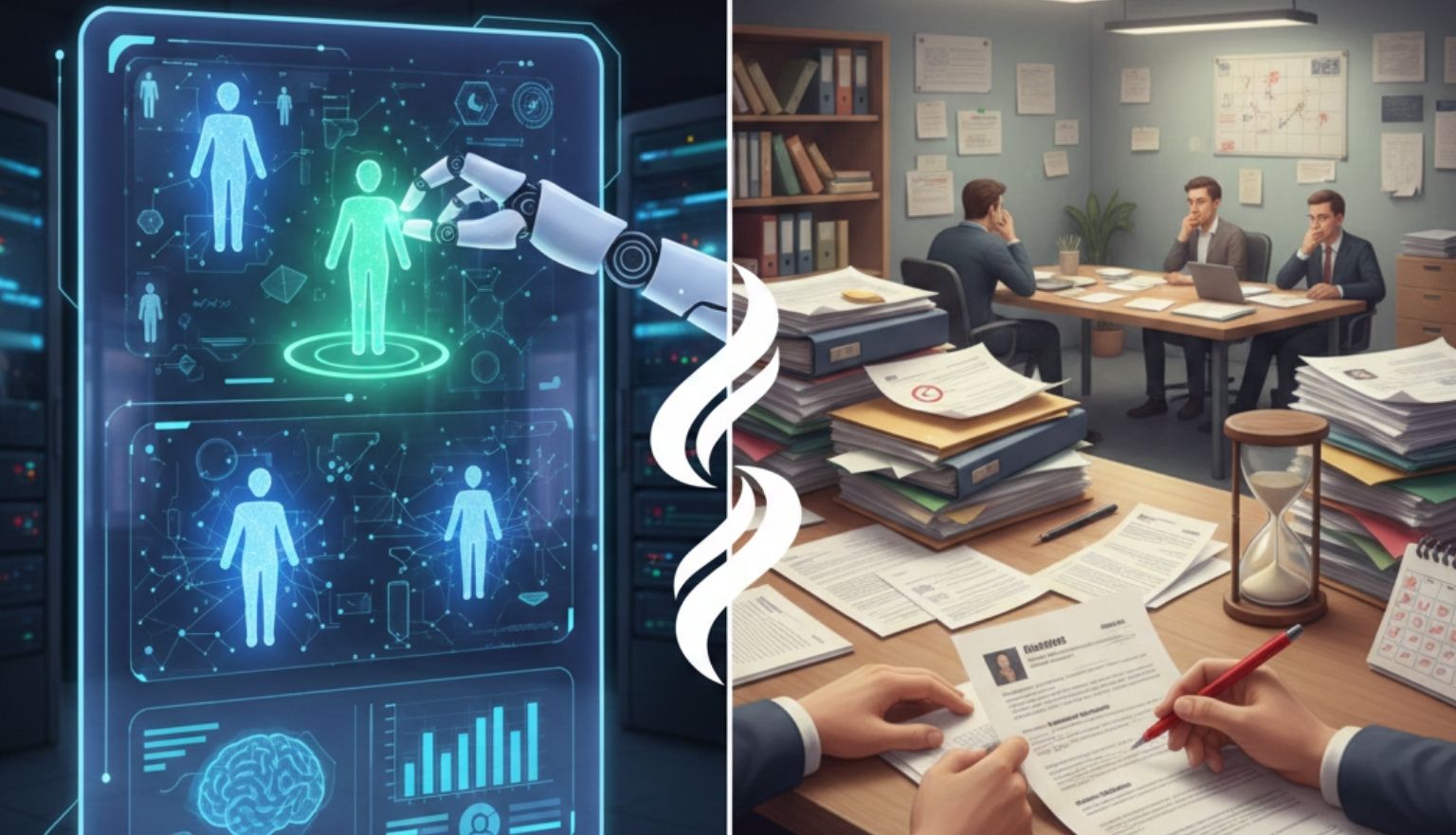
The New Reality of Hiring
Hiring has historically been driven more by instinct than insight.
A recruiter scanned a resume in seconds, a manager leaned back in an interview chair, and somewhere betweenfirst impressions and gut instinct, a decision was made that could shape both a career and a company’s future. Sometimes that instinct was brilliant. Othertimes, it led to mismatches that no one had the data to predict.
That era is quietly, but decisively, changing.
In 2025, organisations are no longer relying solely on instinct.Research shows that nearly 92%of companies plan to increase their investment in AI over the next three years, signalling a broader shift toward data informed decision making across business functions, including HR. At the same time, around 92%of companies say theyare excited to use AI at work, suggesting that people are ready to engage with smarter, more transparent ways of working.
Together, these forces are reshaping recruitment from a process built onimpressions into one guided by insight.
What Traditional Hiring Still Gets Right
Traditional recruitment is not outdated. In fact, it remains deeplyhuman, relational, and often essential.
It brings conversation into the room. It allows hiring managers to read tone, assess communication, and sense cultural alignment in ways that algorithms alone cannot fully replicate. It honours lived experience, careerjourneys, and the stories behind professional growth.
But even with these strengths, traditional hiring is beginning to feelstretched in a world where roles evolve faster than ever.
Here is where it continues to shine.
• Enables meaningful, in depth conversations about experience
• Helps assess communication,presence, and interpersonal fit
• Provides qualitative contextthrough reference checks
• Works effectively for well-established, linear career paths
Where Traditional Hiring Falls Short
As hiring volumes increase and job roles become more complex, thelimitations of conventional recruitment become harder to ignore.
• It slows down when applicant numbers rise
• It depends heavily onsubjective judgment
• It places too much weight onresumes and past titles
• It often misses transferableand latent skills
• It prioritises what candidateshave done instead of what they could become
These blind spots are precisely why AI powered hiring assessments are gaining momentum.
What AI Hiring Assessments Change
AI hiring assessments shift the question from “what have you done” to“how do you think and perform.”
Instead of simply scanning resumes, these systems place candidates in realistic scenarios, using skill simulations, behavioural tasks, and intelligent role mapping to uncover deeper patterns in how people work.
They allow organisations to see talent more clearly and more completely.
• Measure real task based competence at scale
• Highlight strengths and development areas beyond the CV
• Predict likely on the job performance using data patterns
• Reduce time to hire byautomating routine screening
Most importantly, they help surface high potential candidates who might have been overlooked by traditional hiring filters.
AI Does Not Replace Humans, It Supports Them
A common fear is that AI will take hiring decisions away from people.
In reality, the most effective systems are built on collaboration.
Humans define what success looks like in a role. AI provides structuredinsights based on data. Recruiters interpret those insights, add context, andmake the final decision.
When used responsibly, AI becomes a trusted advisor rather than anautomated judge.
Ethical design matters here. Transparent, auditable AI systems that are regularly checked for bias build confidence among both employers and candidates. When people understand how decisions are made, trust in the processgrows.
A Better Approach for Students and EarlyCareer Talent
Traditional recruitment often struggles with early career hiring because students lack long professional histories.
AI assessments help bridge that gap by focusing on potential rather thanpast titles.
Through realistic tasks, students can demonstrate problem solving,adaptability, and collaboration in ways that go beyond grades or internships.Employers, in turn, gain a clearer picture of each candidate’s real capability.
Instead of funnelling students into rigid career tracks, AI based assessments can guide them toward roles where they are most likely to thrive.
How ChangeBegins Redefines TalentIntelligence
ChangeBegins is built on a human first, data powered philosophy. OurTalent Intelligence Hub connects structured candidate assessments with real world role outcomes, creating smarter and more confident hiring decisions.
Here is what sets our approach apart.
1. Role oriented outcomes, not just scores
We do not reduce candidates to a single number. Our role matching AI identifies where they are most likely to grow and succeed.
2. Interpretability by design
Every AI insight comes with clear explanations and suggested development areas, enabling hiring panels toask better questions rather than blindly accept results.
3. Seamless integration
Our platform works along side existing ATS systems, allowing organisations to enhance their hiring process without disruption.
4. ASK MAAYA in action
Our AI assistant, trained on ChangeBegins frameworks, responds to recruiter questions in real time, ensuring that insights translate into meaningful action.
The Bottom Line
Traditional hiring brings human connection and meaningful conversation.AI driven assessments bring scale, pattern recognition, and predictive clarity.
When combined thoughtfully, they shorten hiring cycles, uncover hidden talent, and help organisations make more future ready choices. For candidates,the same tools offer clearer fit and new career pathways that were previously invisible.
If you want to turn assessment data into decisions that truly matter,ChangeBegins offers a platform that blends the best of both worlds.
Get Started with ChangeBegins
Explore how our TalentIntelligence Hub, role matching AI, and predictive hiring platform cantransform your recruitment outcomes today.