Career Awareness: What It Is, Why It Matters and How Students Can Build It

Career awareness means understanding the different careers available, what those careers involve, and the education, skills and experience they may require. For students, it is an important first step toward making informed decisions about subjects, higher education, skills and future work. You don't need to know exactly what you want to become. But it helps to know what is possible.
What Is Career Awareness?
Career awareness is about understanding the world of work and the career options available within it.
It includes learning about:
- Different careers and industries
- What people actually do in different roles
- Skills required for different careers
- Education and qualification pathways
- Workplace environments
- Career growth and progression
- Emerging career opportunities
For example, knowing that cybersecurity is a career is basic awareness. Knowing that it includes roles such as security analyst, security engineer and incident responder, each with different responsibilities and skill requirements, represents deeper career awareness. The key point is simple: students cannot explore career paths they have never encountered.
Why Is Career Awareness Important for Students?
Students often make career decisions with incomplete information. Their choices can be influenced by family expectations, peer pressure, popular trends, social media, salary expectations or limited exposure to different industries.
Career awareness gives students a wider starting point.
It can help them:
- Discover careers they have never considered
- Understand what different jobs actually involve
- Connect their interests with possible career paths
- Learn which skills different careers require
- Understand education and qualification options
- Discover emerging career opportunities
- Make better-informed decisions about their future
What Should Students Know About a Career?
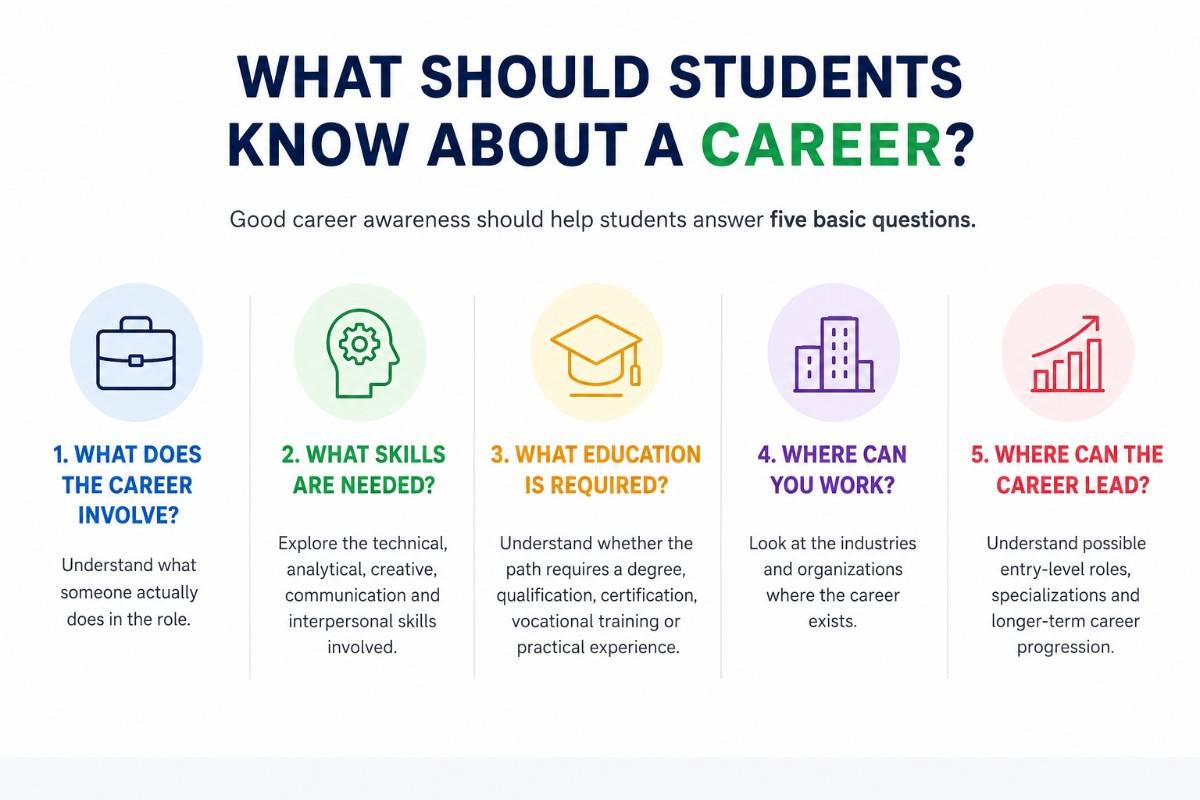
Good career awareness should help students answer five basic questions.
What does the career involve?
Understand what someone actually does in the role.
What skills are needed?
Explore the technical, analytical, creative, communication and interpersonal skills involved.
What education is required?
Understand whether the path requires a degree, qualification, certification, vocational training or practical experience.
Where can you work?
Look at the industries and organizations where the career exists.
Where can the career lead?
Understand possible entry-level roles, specializations and longer-term career progression.
These questions turn a job title into something students can actually understand.
Career Awareness vs. Career Exploration
Career awareness and career exploration are connected, but they are not the same.
Career awareness is knowing what exists.
For example: Career awareness: "Cybersecurity is a career option."
Career exploration is investigating what might fit you.
For example: Career exploration: "What does a cybersecurity analyst do? What skills are required? What education do I need? Would I enjoy this kind of work?"
Once students become aware of different possibilities, they can move into career exploration and investigate specific paths in greater depth.
Career Awareness Activities for Students
Career awareness doesn't have to mean sitting through another presentation about careers. Students can learn by interacting with the real world.
Research an unfamiliar career
Choose a career you know little about and find out what the person does, what skills are required, what education is needed, where they work and where the career can lead.
Talk to a professional
Ask someone working in the field:
- What does your typical day look like?
- What do you enjoy about your work?
- What is challenging?
- Which skills matter most?
- How did you get started?
Attend career fairs and events
Career fairs expose students to employers, industries and professions they may not encounter in everyday life.
Try job shadowing
Watching someone work can reveal the difference between what a career sounds like and what doing the job is actually like.
Work on a small project
Interested in data science? Analyse a dataset.
Interested in design? Create a small design project.
Interested in marketing? Build a mock campaign.
You don't always need a formal internship to start testing an interest.
Take an appropriate career assessment
career assessment can provide insights into interests, strengths, behavioural preferences and work styles. The result should give students more areas to investigate, rather than dictate one career.
Career Awareness for High School Students
High school is an important time to build career awareness because students begin making decisions about subjects, streams, courses and higher education. However, career awareness should create exposure, not pressure.
A student does not need to decide:
"This is what I will do for the rest of my life."
A better question is:
"What careers interest me enough to learn more about?"
Students can explore different career fields, connect subjects with real-world careers, talk to professionals, attend career events, try projects, learn about emerging occupations and explore education pathways.
The goal is to discover possibilities before making major decisions.
Career Awareness for College Students
Career awareness doesn't stop when students enter college. A degree can lead to far more careers than students initially realize.
For example, a computer science student may think primarily about software development, but their skills could also lead toward:
- Data analytics
- Cybersecurity
- UX
- Product management
- Cloud technology
- Research
- Technology consulting
- Technical sales
How Can Career Assessments Support Career Awareness?
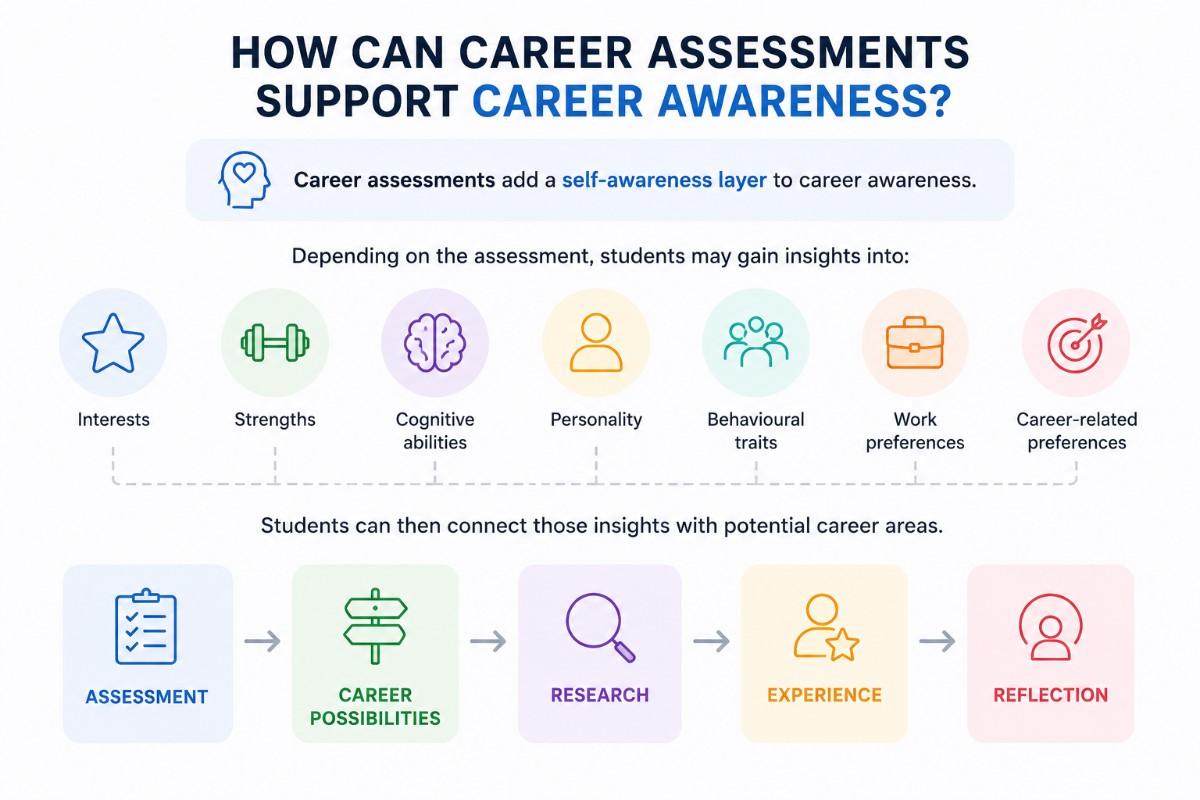
Career assessments add a self-awareness layer to career awareness.
Depending on the assessment, students may gain insights into:
- Interests
- Strengths
- Cognitive abilities
- Personality
- Behavioural traits
- Work preferences
- Career-related preferences
Students can then connect those insights with potential career areas.
A useful process is:
Assessment → Career possibilities → Research → Experience → Reflection
For students who want to understand their interests and potential career directions in greater depth, psychometric test for career guidance.
How Can Career Platforms Improve Career Awareness?
Students often have to search for career information, assessments, skills and pathways separately.
Modern career guidance and talent intelligence platforms can bring these elements together.
Depending on the platform, students may be able to:
- Discover different career options
- Complete career assessments
- Understand their interests and strengths
- Explore relevant roles
- Compare skill requirements
- Identify development areas
- Understand potential career pathways
- Track their progress
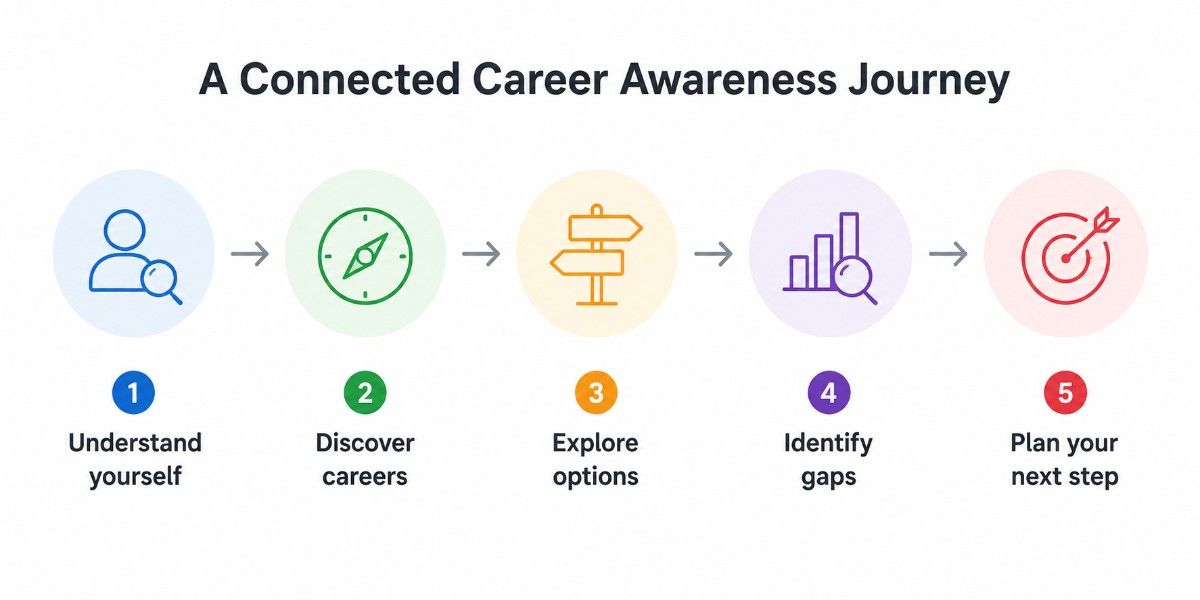
This creates a connected journey:
Understand yourself → Discover careers → Explore options → Identify gaps → Plan your next step
For schools and colleges, technology can also provide insights into student interests, capabilities, development areas and career readiness, helping connect career guidance with employability and placement outcomes.
How Can Schools and Colleges Improve Career Awareness?
Career awareness works best when it is part of a student's journey rather than a single annual career day.
Schools and colleges can provide:
- Career awareness programs
- Career fairs
- Professional talks
- Alumni interactions
- Workplace visits
- Job-shadowing opportunities
- Career assessments
- Industry projects
- Internships
- Career information resources
- Exposure to emerging industries
The strongest programs don't simply tell students about careers. They give students opportunities to see, question, experience and reflect on them.
How Career Awareness Connects to Career Exploration and Readiness
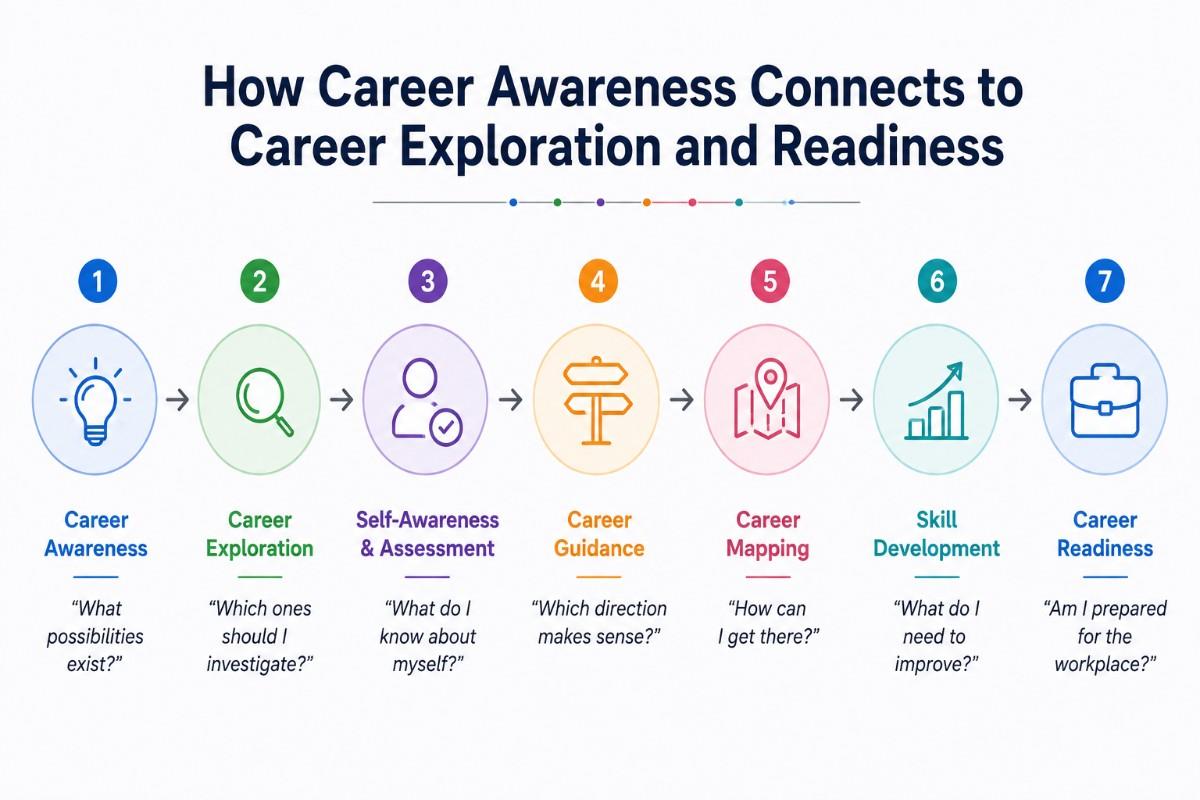
For the next stage, students can explore career guidance to understand how career exploration can lead to more informed decisions.
Final Takeaway
Career awareness is about knowing what is possible before deciding what is right for you. Students don't need to have their entire future figured out. They need enough exposure to careers, industries, skills and education pathways to make their next decision with better information. Start by discovering careers you don't know much about. Talk to people doing the work. Try small projects. Learn what different careers require. Use assessments when they can provide useful self-insight. Then move from awareness to career exploration, where you can investigate which possibilities actually fit you. Because the goal isn't to choose a career as early as possible.
Frequently Asked Questions
What is career awareness?
Career awareness is understanding different careers, what they involve, and the education, skills and experience they may require.
Why is career awareness important?
It helps students discover opportunities they may not otherwise encounter and make more informed decisions about education and future work.
What are career awareness activities?
Career research, professional conversations, career fairs, workplace visits, job shadowing, projects, internships and appropriate career assessments are common career awareness activities.
What are career awareness skills?
Career awareness skills include self-awareness, research, communication, critical thinking, decision-making, goal setting and adaptability.
What is the difference between career awareness and career exploration?
Career awareness is understanding what career possibilities exist. Career exploration involves researching and evaluating specific careers to understand whether they may be worth pursuing.
Can career assessments help with career awareness?
Yes. Career assessments can help students understand their interests, strengths and preferences, giving them more information when exploring potential career paths.