Deep-Tech Talent Intelligence Platform: What It Means for the Future of Hiring
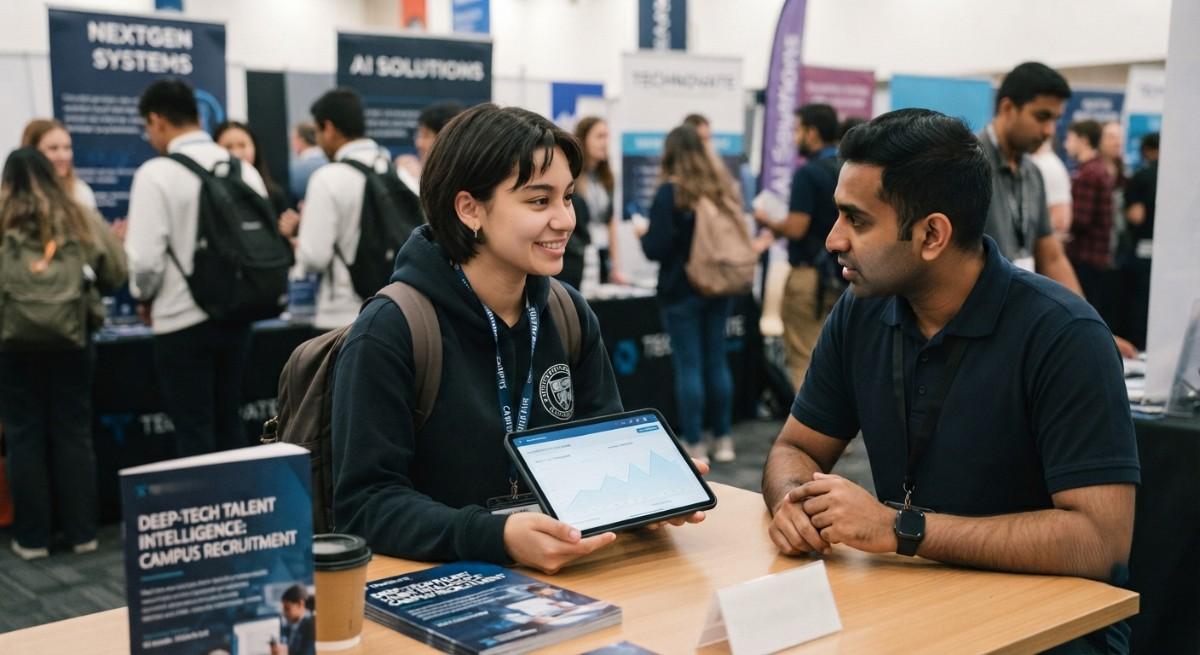
Hiring for a deep-tech role is rarely as simple as matching a job title with a resume. A company looking for an AI researcher, semiconductor engineer, robotics specialist or cybersecurity professional may need a very specific combination of technical knowledge, experience and problem-solving ability. Two candidates can have similar job titles while possessing completely different capabilities. This is one reason talent intelligence is becoming more relevant to organisations working in specialised technology fields.
A deep-tech talent intelligence platform is designed to help organisations understand that talent in greater detail. Instead of looking only at who is available for a job, it can help connect skills, experience, technical domains and role requirements to create a clearer picture of where relevant talent exists and how it may fit particular opportunities.
Why deep-tech hiring needs a different approach
Deep-tech companies often operate in areas where the required skills are highly specialised and constantly evolving. Artificial intelligence, semiconductors, robotics, advanced computing, cybersecurity and other technical fields can require combinations of knowledge that are difficult to capture through a conventional job title.
Consider two candidates who both describe themselves as software engineers. One may have spent years working on embedded systems, another on machine learning infrastructure, and another on distributed cloud systems. A basic search for “software engineer” will find all three, but it does little to explain which candidate is relevant to a particular technical problem.
That is where skills-level intelligence becomes more useful.
The question changes from “Who has this job title?” to “Who has the capabilities this role actually requires?”
What a deep-tech talent intelligence platform looks at
The exact capabilities vary between platforms, but the underlying idea is to build a richer picture of technical talent.
Technical skills are an obvious part of that picture. A platform may need to distinguish between broad categories and highly specific capabilities within areas such as machine learning, semiconductor design, embedded systems or cybersecurity.
Experience provides another layer. A person may possess a skill but have very different levels of practical exposure to it. Projects, previous roles and the environments in which someone has worked can provide useful context.
The role itself also matters. A good matching process needs to understand the capabilities required by the employer rather than treating every technical vacancy as a generic skills checklist.
Some emerging deep-tech talent platforms are already moving in this direction. Trutalent, for example, describes its approach around mapping deep-tech engineers and technical disciplines, while Zeki Data positions its platform around intelligence on technical and AI talent.
Talent intelligence is broader than recruitment
It is tempting to think of talent intelligence as another recruitment tool. That undersells what the concept can become.
An organisation can use talent intelligence to understand where particular skills are concentrated, which capabilities are becoming harder to find and what its future workforce might need.
For example, a company planning to expand its AI capabilities may discover that the skills it needs are not widely available in its current location. That information can influence where it builds teams, whether it develops existing employees or whether it changes its hiring strategy.
In that sense, talent intelligence can contribute to workforce planning before a vacancy is even created.
Why skills matter more than titles
The shift toward skills-based hiring is particularly relevant to deep-tech organisations because emerging technologies often create roles that do not have long-established career paths.
Someone may have developed relevant capabilities through research, open-source work, academic projects, adjacent technical roles or interdisciplinary experience without ever holding the exact title listed in a job description.
A rigid title-based search can overlook that person.
A skills-based approach has the potential to widen the talent pool without lowering the technical requirements. Instead of relaxing the definition of a qualified candidate, it makes the definition more precise.
That distinction is important.
AI can make talent intelligence more useful
The amount of information involved in modern talent discovery can become difficult for people to process manually. This is one area where AI can provide practical value.
AI can help extract skills from profiles, interpret job requirements, identify relationships between capabilities and roles, and process large volumes of information more quickly than a recruiter working manually through individual profiles.
But speed should not be confused with accuracy.
A platform recommending a candidate for a specialised technical role needs to provide meaningful evidence for that recommendation. Recruiters should be able to understand why a profile has been identified as relevant rather than receiving an unexplained score from an algorithm.
For high-impact hiring decisions, human judgement remains important.
The connection between talent intelligence and universities
Deep-tech talent intelligence is not relevant only to companies.
Engineering colleges and universities have their own version of the same problem: they need to understand what capabilities students have and how those capabilities connect to the changing labour market.
Imagine a college with several thousand engineering students. It knows their degrees, academic results and perhaps their placement eligibility. But that information does not necessarily tell the institution which students have strong analytical ability, which students have particular technical capabilities, where skill gaps exist or which emerging career paths may suit different groups.
That is where the ideas behind talent intelligence can extend into higher education.
Student assessment can provide a more detailed picture of capabilities. Skill-gap analysis can identify development needs. Career mapping can help connect those capabilities with potential directions. And predictive matching can eventually connect students with relevant roles or opportunities.
The result is a bridge between student intelligence and employer intelligence.
A talent intelligence model for colleges
A practical model could begin with understanding the student.
The college first assesses capabilities, behavioural characteristics and relevant skills. It then identifies gaps against the types of roles students may want to pursue. Students can work on those gaps through training, projects, internships or other practical experiences.
As they progress, their profiles can be reassessed. When employers arrive with specific requirements, the college has a much richer pool of information from which to identify potentially relevant students.
This is more useful than waiting until placement season to discover that a large group of students lacks a particular capability.
Why this matters as technology changes
The case for talent intelligence becomes stronger as the skills market becomes more dynamic.
The World Economic Forum's Future of Jobs Report 2025 estimates that around 39% of workers' existing skill sets could change or become outdated by 2030. AI and big data, networks and cybersecurity, and technological literacy are among the fastest-growing skill areas identified in the report.
For organisations working in deep technology, this creates a moving target. The skills required today may not be exactly the skills required three years from now.
That makes a static talent database less useful than an intelligence layer that can continuously help organisations understand skills, people and roles.
The bigger opportunity
The most interesting part of talent intelligence is not the technology itself. It is the change in the question organisations are asking.
Traditional recruitment often starts with a vacancy and searches for people who appear to match it.
Talent intelligence can start much earlier by asking what capabilities exist, what capabilities are missing, where relevant talent can be found and how those capabilities might align with future needs.
For deep-tech organisations, that shift could become increasingly important as specialised skills become more difficult to identify through conventional hiring methods.
For universities, the same thinking can help create a stronger connection between what students are learning, what they can actually do and where the labour market is heading.
Final thoughts
A deep-tech talent intelligence platform is ultimately about understanding talent at a deeper level than job titles and resumes allow.
For employers, that can mean finding specialised capabilities that traditional searches overlook and gaining a clearer view of future workforce needs. For colleges, it can mean understanding student capabilities earlier and connecting education more closely with emerging career opportunities.
The technology will continue to evolve, but the underlying problem is unlikely to disappear.
Organisations will still need to answer one difficult question: where is the talent we need, what can that talent actually do, and how well does it fit the work ahead?
Talent intelligence is an attempt to answer that question with better information.