How Predictive Skill Matching Can Improve Student-Role Fit in Campus Hiring
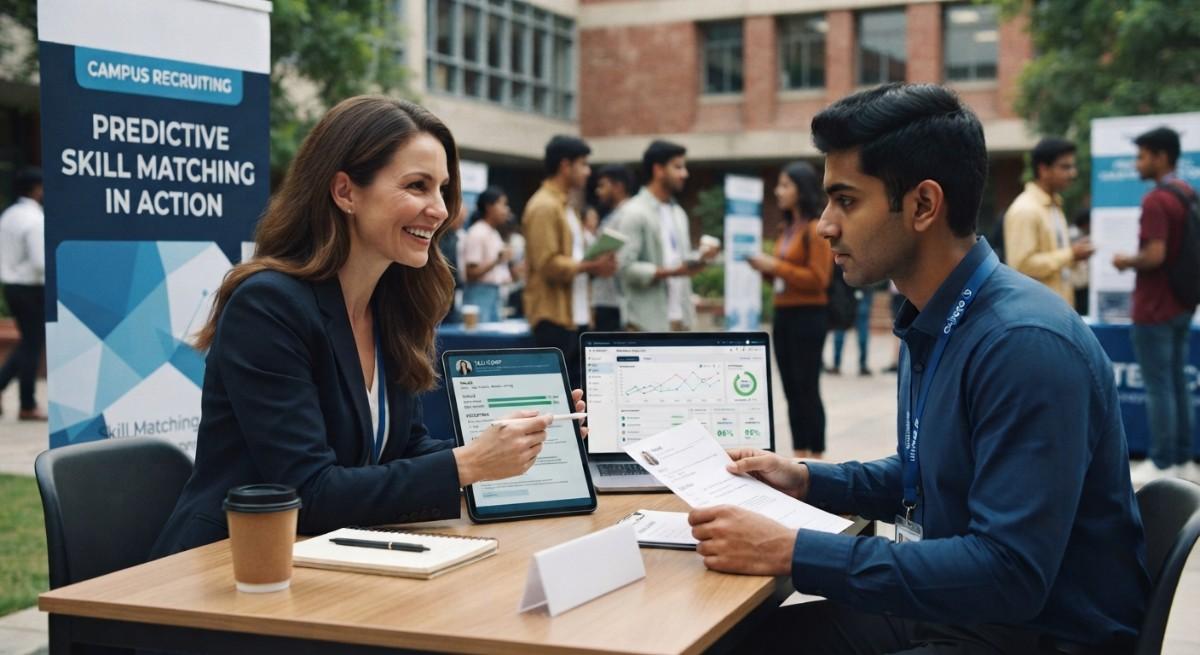
Campus hiring has become more complicated than simply checking whether a student has the right degree, CGPA and a reasonably good resume. Engineering colleges now have students coming from different academic backgrounds, with different technical abilities, projects, interests and levels of workplace readiness. At the same time, recruiters are hiring for increasingly specialised roles. This creates a problem that traditional shortlisting often struggles with: how do you identify the students whose capabilities actually match a particular role?
That is where predictive skill matching becomes interesting. Instead of looking at students only through qualifications or resume keywords, it uses a broader set of information about skills, capabilities and role requirements to identify potential matches. The idea is particularly relevant to campus hiring, where placement teams may be working with hundreds or thousands of students and multiple employers with very different expectations.
Why traditional campus shortlisting can miss good candidates
Most colleges already have a process for shortlisting students. Academic performance, eligibility criteria, aptitude tests, technical assessments and interviews all have their place. The problem starts when these signals are treated as a complete picture of a student's employability.
Consider two students applying for a software role. One has an excellent CGPA and a resume filled with programming languages. Another has a slightly lower academic score but has built relevant projects, demonstrates strong problem-solving ability and has performed well in practical assessments. If the initial screening is heavily dependent on CGPA or resume keywords, the second student may never get the opportunity to demonstrate what they can actually do.
This does not mean academic performance should be ignored. It means colleges and recruiters can benefit from having more evidence before deciding who is suitable for a particular opportunity.
Research and emerging AI-based matching systems are increasingly looking at skills extracted from candidate profiles and job descriptions rather than relying entirely on traditional keyword matching. Some approaches use multidimensional skill similarity to connect candidates with suitable internships or roles. The underlying shift is from asking whether a candidate appears to match a job description to asking whether the candidate's capabilities are relevant to the work itself.
What predictive skill matching changes
Predictive skill matching adds another layer to the process by comparing a student's profile with the requirements of a specific role.
Imagine a company hiring for a data analyst position. The role may require analytical thinking, spreadsheet or programming knowledge, data interpretation, communication and the ability to work with business teams. A student assessment platform can provide evidence across some of these areas, while the employer's role profile establishes what matters for the position.
The resulting picture is more useful than a simple list of eligible students. Instead of asking, “Who can apply?”, the placement team can begin asking, “Which students appear most aligned with this role, and what evidence supports that recommendation?”
That distinction matters because not every student who is eligible for a role is necessarily equally prepared for it.
It can help colleges identify skill gaps earlier
The most useful application of matching may actually happen before a company visits the campus.
Suppose a college knows that several employers recruiting its students are looking for strong analytical ability, communication skills and specific technical competencies. By assessing students well before placement season and comparing their profiles with these requirements, the college can see where the gaps are concentrated.
Perhaps students are technically strong but struggle with communication. Perhaps they have good programming fundamentals but lack experience applying those skills to real projects. Or perhaps a group of students is well suited to a particular role but does not yet have the required certification or practical exposure.
That information gives placement teams time to act.
Instead of discovering the problem during the final recruitment drive, colleges can use the findings to guide training, projects, mentoring and career preparation. The process becomes much more useful when it looks something like assess, identify gaps, develop, reassess and then match.
Student-role fit is becoming more important
There is another reason predictive matching deserves attention. Getting students placed is important, but placement numbers alone do not tell the whole story.
A student who accepts a role that bears little relationship to their strengths or interests may face a very different experience from someone entering a position that fits their capabilities. The same applies to employers. A company does not simply want to fill a vacancy. It wants people who can learn, contribute and grow within the role.
That makes role fit a useful consideration alongside eligibility.
It also changes how colleges can think about their role in the placement process. Instead of preparing every student for the same generic version of employability, institutions can begin using student data to understand different strengths and development needs.
What information should be considered?
A useful predictive skill matching system should not depend on one score. The value comes from bringing together several relevant signals.
Technical capability is one obvious component, particularly for engineering students. Depending on the role, this could include programming, engineering software, data analysis, domain knowledge or other technical competencies.
Cognitive capabilities can provide another layer. Problem-solving and analytical thinking, for example, may matter considerably for some roles but less for others.
Behavioural information can also be useful. Communication, collaboration, adaptability and other behavioural characteristics can influence how well someone works within a particular environment.
Finally, the role itself needs to be understood properly. A matching system can only produce useful recommendations if the organisation has a reasonably clear picture of the capabilities required for the job.
The important point is that matching should be based on relevant evidence, rather than simply producing a mysterious percentage score.
How colleges can use predictive skill matching
For placement teams, predictive skill matching can become part of a wider student-development process rather than a tool used only when recruitment starts. A college could assess students during their academic journey, understand their strengths, identify gaps against potential career paths and provide targeted development opportunities. As students progress, the institution can reassess them and build a more current picture of their capabilities. When a relevant employer opportunity appears, the placement team has more information available than a resume and CGPA alone. This approach can also help students understand themselves better. Instead of receiving generic advice to “improve your skills”, a student could see which capabilities are already strong, which need development and which roles may align with their current profile.
Where ChangeBegins fits
This is closely aligned with the way ChangeBegins approaches talent intelligence. Its platform brings together behavioural intelligence, AI-driven assessment and predictive matching to understand talent beyond conventional indicators such as resumes and grades.
For colleges, that creates a potential connection between assessment and placement that is often missing. A student can first be assessed, their capabilities and gaps can be understood, and that information can then contribute to career and role alignment. ChangeBegins also positions predictive matching around aligning people with roles based on factors associated with engagement, performance and retention. The important part is not the word “predictive” by itself. The value comes from turning assessment data into something a placement team can actually use.
Final thoughts
Predictive skill matching is not about replacing recruiters or placement officers with an algorithm. Its more practical role is to give them a better view of the student population they are responsible for. For engineering colleges, that can mean moving beyond a simple question of who is eligible for a job and towards a more useful understanding of who has the capabilities required, who needs further development and where individual students may be better aligned. As campus hiring becomes increasingly skills-focused, that additional layer of intelligence could make student assessment far more valuable than a score sitting in a spreadsheet.