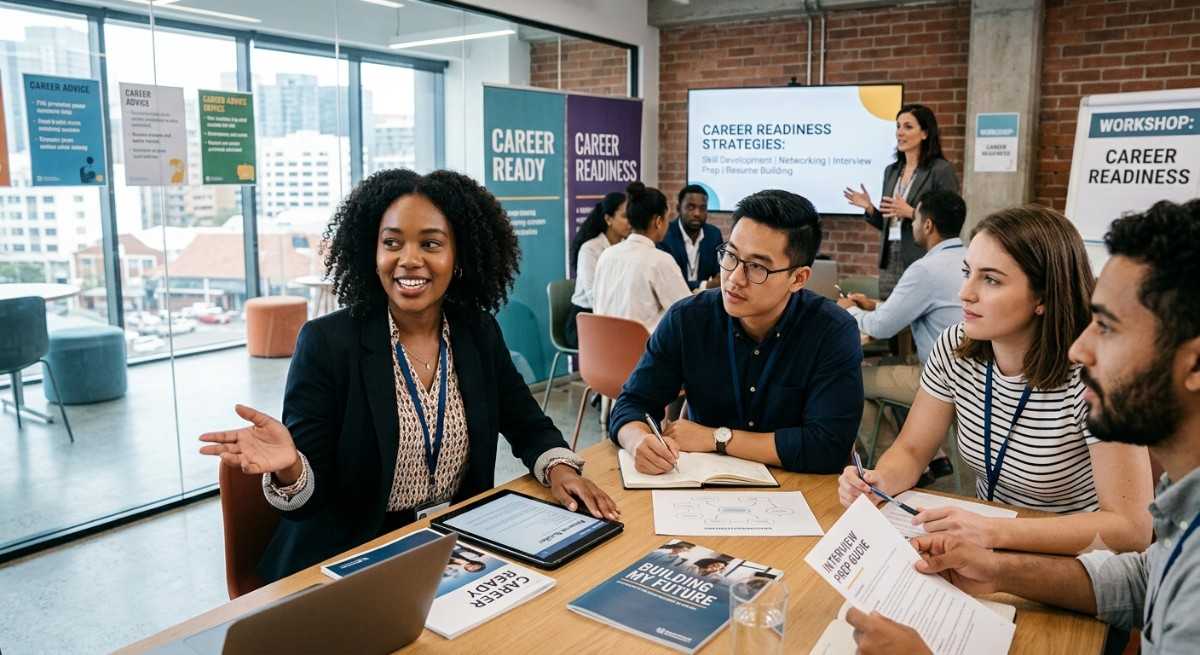
The gap between graduating from college and landing a meaningful first job has never been more talked about. A strong career readiness strategy is what turns a degree into a genuine head start, and it is not the responsibility of any single group. Students, placement officers, and employers each hold a piece of the puzzle. When all three work from the same playbook, graduate employability improves, campus placement rates climb, and companies gain access to a stronger talent pipeline.
Below are the top five career readiness strategies that work across all three groups, with practical, job-market-ready steps for each stakeholder.
1. Build Real-World Experience Through Internships and Experiential Learning
Classroom knowledge matters, but employers consistently hire for demonstrated ability. Experiential learning, internships, and live industry projects give students the work-ready confidence that grades alone cannot signal.
|
Audience
|
How to Apply This Strategy
|
|
Students
|
Participate in internships, live projects, volunteering opportunities, industry competitions, and experiential learning programs to gain practical exposure. Real-world experience helps you apply classroom concepts, build confidence, strengthen your resume, and demonstrate career readiness to employers.
|
|
Placement Officers
|
Integrate internships, industry projects, and experiential learning into academic programs. Build partnerships with employers, facilitate structured internship opportunities, and track student outcomes to improve career readiness, graduate employability, and placement success rates.
|
|
Employers
|
Collaborate with colleges to offer internships, apprenticeships, and project-based learning opportunities. These programs help identify high-potential talent early, assess candidates in real work environments, and create a reliable pipeline of future employees.
|
2. Develop In-Demand Soft Skills and Employability Skills
Technical qualifications open the door, but soft skills — communication, teamwork, adaptability, and problem-solving — determine who thrives. Employability skills are now a central pillar of any serious career readiness strategy.
|
Audience
|
How to Apply This Strategy
|
|
Students
|
Focus on developing both technical and soft skills throughout your college journey. Participate in student clubs, leadership activities, public speaking events, workshops, and online certification programs. Strong communication, teamwork, adaptability, and problem-solving abilities can significantly improve your career readiness and employability.
|
|
Placement Officers
|
Create a structured skill-development ecosystem that includes soft skills training, industry-relevant upskilling programs, career guidance sessions, mock interviews, and professional development workshops. Addressing skill gaps proactively helps students become more confident, placement-ready, and aligned with employer expectations.
|
|
Employers
|
Clearly communicate the skills and competencies required for entry-level roles and collaborate with educational institutions to bridge talent gaps. Supporting workshops, mentorship initiatives, and industry-led training programs helps create a pipeline of graduates who are better prepared for workplace success.
|
3. Strengthen Industry-Academia Collaboration
The most effective career preparation happens when the classroom and the workplace are connected. Industry-academia collaboration keeps curricula current and ensures students learn the job-market skills that employers reward.
|
Audience
|
How to Apply This Strategy
|
|
Students
|
Actively participate in career fairs, industry webinars, networking events, alumni interactions, and guest lectures. Building professional connections early helps you understand industry expectations, explore career opportunities, and develop the networking skills that are essential for long-term career success.
|
|
Placement Officers
|
Strengthen relationships with employers, alumni networks, industry associations, and recruitment partners. Consistent industry engagement creates more internship opportunities, improves placement outcomes, and ensures students gain exposure to current workplace trends and employer expectations.
|
|
Employers
|
Collaborate with colleges through mentorship programs, guest lectures, career workshops, mock interviews, and curriculum advisory initiatives. Early engagement with students helps build brand awareness, identify promising talent, and develop a stronger pipeline of career-ready graduates.
|
4. Leverage Career Readiness Assessments and Data
A career readiness strategy is only as good as its measurement. Data-driven assessments help every stakeholder see where students stand and where the skill gap lies before it becomes a placement problem.
|
Audience
|
How to Apply This Strategy
|
|
Students
|
Regularly evaluate your strengths and areas for improvement through self-assessments, mock interviews, aptitude tests, and career readiness assessments. Constructive feedback helps you identify skill gaps, improve interview performance, and create a focused plan for career development.
|
|
Placement Officers
|
Use data and analytics to measure student outcomes, including assessment results, placement rates, internship participation, and employer feedback. Tracking these metrics helps identify skill gaps, refine career readiness programs, and ensure continuous improvement in graduate employability.
|
|
Employers
|
Provide structured feedback on candidate performance, hiring trends, and in-demand skills to educational institutions. Sharing workforce insights helps colleges align training programs with industry needs and develop graduates who are better prepared for the workplace.
|
5. Master Personal Branding, Resume, and Interview Preparation
Even the most talented candidate needs to present themselves well. Strong personal branding, resume building, and interview preparation are the finishing touches that convert readiness into job offers.
|
Audience
|
How to Apply This Strategy
|
|
Students
|
Build a strong personal brand by creating a professional resume, an updated LinkedIn profile, and a portfolio that showcases your projects and achievements. Practice mock interviews, prepare structured answers using the STAR method, and learn to communicate your strengths with clear, evidence-based examples. A confident, well-presented candidate stands out even in a competitive job market.
|
|
Placement Officers
|
Organize resume-building clinics, LinkedIn and personal-branding workshops, and structured mock-interview drives with employer panels. Provide personalized feedback on resumes, portfolios, and interview performance so students learn to present their skills convincingly and improve their conversion from interview to offer.
|
|
Employers
|
Share real interview expectations, evaluation criteria, and examples of strong candidate profiles with partner institutions. Offer resume feedback sessions, participate in mock interview panels, and guide students on how to present relevant skills—helping build a pool of candidates who are interview-ready and aligned with role requirements.
|
Bringing the Career Readiness Strategy Together
Career readiness is a shared responsibility. Students who take ownership of their employability skills, placement officers who build structured programs and industry ties, and employers who invest early all contribute to the same outcome: confident, work-ready graduates and a healthier talent pipeline.
The institutions and individuals that treat career readiness as an ongoing strategy — rather than a last-semester scramble — are the ones that consistently see stronger graduate employability and better placement results.