Transforming Career Guidance: How Behavioral Intelligence Identifies the Right Role-Fit
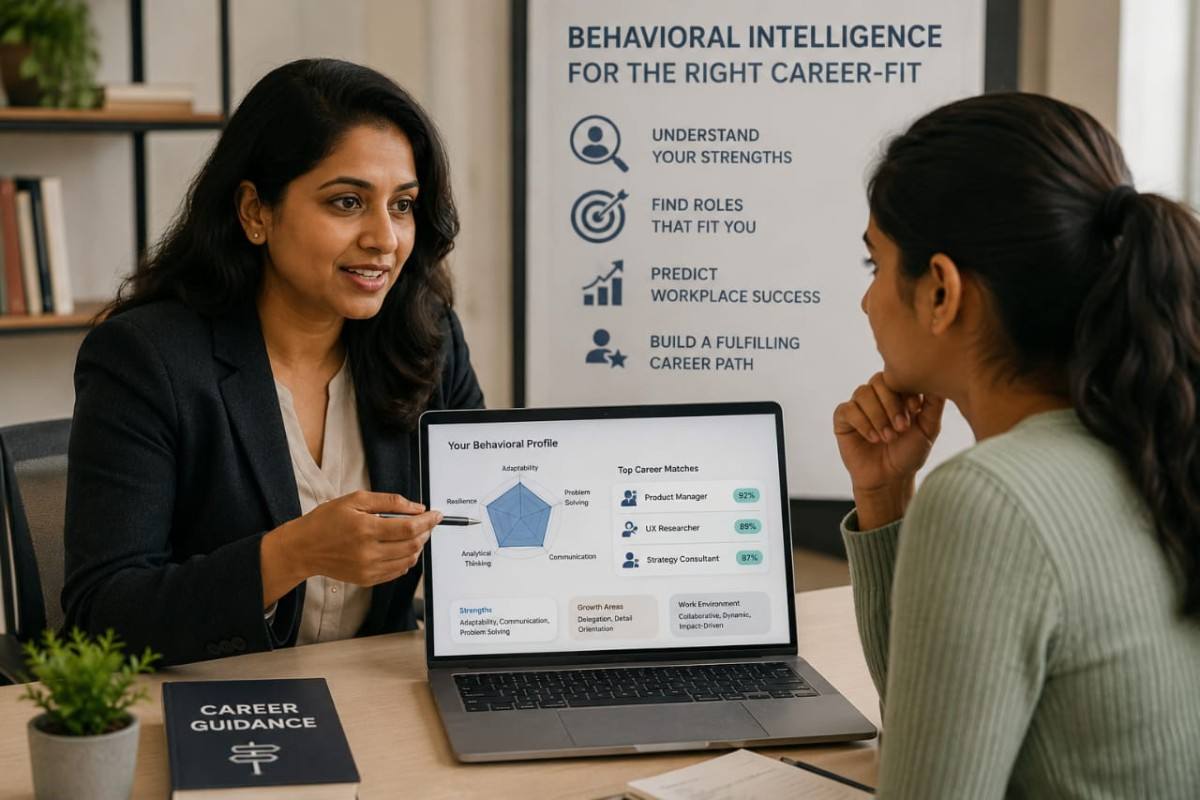
Picture this: a student walks into your office, resume in hand, asking "What career should I pursue?" You scan their qualifications, discuss their interests, maybe even administer a personality test. But at the end of the day, you're still left guessing. Guessing which path will truly align with their unique strengths. Guessing where they'll find not just a job, but fulfillment. Guessing whether they'll sink or soar in the roles you recommend.
It's a familiar pain point for career counselors everywhere. Traditional guidance methods — resumes, interest inventories, even personality tests — only scratch the surface of a student's potential. They reveal the "what", but not the "how". Not the intrinsic behaviors that will make or break their success in a given role.
This is where behavioral intelligence emerges as the transformative force in modern career guidance. By diving deep into an individual's behavioral makeup, it provides a scientific, predictive lens into their likely performance and fit within a specific career path. It's the missing piece that turns career guesswork into precision guidance.
What is Behavioral Intelligence in Modern Career Guidance?
Behavioral intelligence is the science of understanding an individual's inherent traits, preferences, and behavioral tendencies in order to predict their likely performance and fit within a given role or team. It goes beyond the "what" of skills and qualifications, diving into the "how" and "why" of an individual's work style and decision-making patterns.
In the context of career guidance, behavioral intelligence tools offer a data-driven, objective lens into a student's natural strengths, blind spots, and optimal working conditions. By mapping these insights to the behavioral demands of different roles and industries, career counselors can guide students towards paths where they are intrinsically wired to thrive.
The Role of Behavioral Intelligence in Achieving the Right Role-Fit
Achieving the right role-fit is critical for both individual fulfillment and organizational success. Behavioral intelligence helps bridge this gap by aligning individual potential with role requirements at a granular level.
Key Benefits of Using Behavioral Intelligence Over Traditional Resumes
Traditional resumes provide a narrow, past-focused view of a candidate's potential. In contrast, behavioral intelligence offers a holistic, predictive lens into their likely performance and engagement. Key benefits include:
How Behavioral Intelligence Tools Predict Workplace Success
Behavioral intelligence tools, such as assessments and simulations, provide a scientific window into an individual's likely workplace performance. Here's how they work:
Implementing Behavioral Intelligence in Institutional Career Counseling
For institutions looking to integrate behavioral intelligence into their career guidance programs, the key is to take a structured, data-driven approach:
- Define Success Profiles: Work with industry partners to identify the behavioral traits that differentiate top performers in various roles.
- Select Validated Tools: Choose scientifically validated behavioral assessment and simulation tools that align with your success profiles.
- Train Counselors: Equip career counselors to interpret behavioral insights and translate them into personalized guidance.
- Integrate with Guidance Programs: Embed behavioral intelligence into existing career exploration and counseling processes.
- Measure Impact: Track student outcomes and satisfaction to continually refine your behavioral intelligence approach.
By operationalizing behavioral intelligence, institutions can deliver career guidance that is both personalized and predictive.
Unlock Student Potential: Getting Started with ChangeBegins
At the forefront of this behavioral intelligence revolution is ChangeBegins — an AI-powered talent intelligence platform that helps institutions align student potential with career success.
By leveraging advanced behavioral science, predictive analytics, and role-fit algorithms, ChangeBegins generates personalized career roadmaps based on each student's unique behavioral profile. From uncovering hidden strengths to predicting job performance, it's the scientific GPS for future-ready career guidance.
To learn how ChangeBegins.ai can help your institution unlock student potential at scale, let's start a conversation.
FAQs
1. What is the difference between behavioral intelligence and emotional intelligence?
Behavioral intelligence focuses on understanding an individual's observable behaviors and predicting their likely performance in a given role. Emotional intelligence, on the other hand, is about recognizing and managing one's own and others' emotions. While related, behavioral intelligence is more directly tied to predicting job fit and performance.
2. How do behavioral intelligence tools determine a candidate's role-fit?
Behavioral intelligence tools determine role-fit by measuring an individual's behavioral traits, benchmarking them against high-performer profiles in specific roles, and using predictive analytics to identify behavioral patterns that correlate with success. This allows for a granular matching of individual behaviors to the demands of different career paths.
3. Can behavioral intelligence be used to predict employee turnover?
Yes, behavioral intelligence can be a powerful predictor of employee turnover. By identifying behavioral traits that are associated with long-term engagement and success within a specific role or organization, these tools can help institutions guide students towards career paths where they are more likely to find lasting fulfillment and stability.
4. Are behavioral intelligence assessments different from standard personality tests?
While there is some overlap, behavioral intelligence assessments are distinct from standard personality tests in a few key ways. Behavioral assessments focus specifically on work-relevant behaviors and are designed to predict job performance and fit. They also often include simulations and are benchmarked against success profiles in specific roles, making them more directly applicable to career guidance.