Campus Recruitment Trends 2026: What Every Placement Team Needs to Know
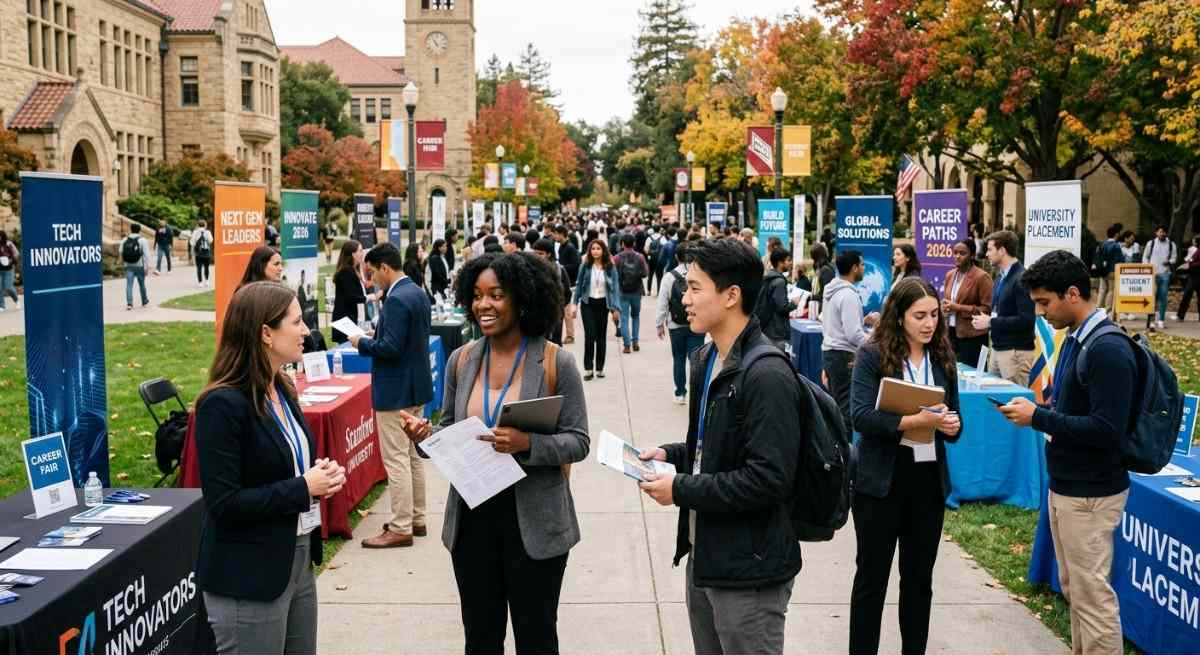
Campus recruitment in 2026 is shaped by one defining tension: employer demand is strong, but placement outcomes are not keeping up. Hiring intent is high and budgets are growing, yet a large share of undergraduates remain unplaced — because hiring has become selective and skills-first, not scarce. For placement teams, the winning response is to measure student readiness early and build the specific capabilities employers now screen for.
There is a strange contradiction at the heart of campus hiring this year, and every Training and Placement Officer can feel it.
The companies are coming. Nearly 73% of employers planned to hire freshers in the first half of 2026, according to the TeamLease EdTech Career Outlook Report. And yet, in the same window, 84% of undergraduates were still unplaced according to Unstop's survey of students.
Both numbers are true at the same time. Demand is back. Access to it is not. That single gap — between employers who want freshers and freshers who can't land the offer — is the real story of campus recruitment in 2026. Understand it, and the right placement strategy becomes obvious.
The Demand Is Real — But It's Selective
Let's be clear about one thing: this is not a weak market. The Unstop Talent Report 2026 found 87.8% of companies actively recruiting and 90% of employers holding or increasing their hiring budgets.
So if the money and the intent are both there, why are so many students still waiting?
Because hiring has become selective rather than scarce. Employers aren't hiring fewer freshers — they're hiring choosier. They're screening for graduates who can prove they can do the work, and passing over those who only have a degree to show. For placement teams, that reframes the entire job: the challenge isn't filling the campus calendar with drives, it's making sure students clear a bar that keeps rising.
Trend 1: Skills Now Beat Pedigree
The clearest shift in 2026 is what employers screen on. The college name and the CGPA are no longer the deciding factors they once were.
In the Unstop survey, 64% of HR leaders said they now define top talent by capabilities — problem-solving, AI and data skills, communication — rather than by degree. The most in-demand skills they named were problem-solving (49%), AI/ML (39%), and emotional intelligence (30%).
Read that list again, because it should shape how you prepare students. Two of the top three are behavioural, not technical. A degree opens the door; demonstrated skill is what walks the student through it. This is precisely why building genuine student employability now matters more than adding another line to a résumé.
Trend 2: The Employability Gap Is Still Wide
Here is the number that explains the whole paradox. The India Skills Report 2026 put overall employability at 56.35%, up from 54.81% the year before.
It's progress. But turn it around: close to 44% of assessed young people are still not considered job-ready. And the picture varies sharply by stream — engineering held strong while vocational streams lagged well behind. When employers are being this selective, that gap is exactly where offers are won and lost.
The lesson for placement teams is uncomfortable but useful: assuming students are ready because they've cleared their exams is the single most expensive mistake you can make. Readiness has to be measured, not presumed.
Trend 3: Hiring Has Moved Beyond the Metros
For years, campus hiring meant the same loop of tier-1 institutes. That's changing. Assessment and staffing firms report a clear, sustained expansion of fresher hiring into tier-2 and tier-3 colleges, driven by better offer-to-join conversion and business moving into smaller cities.
For a placement team outside the metros, this is genuinely good news — but only if your students can meet the skills-first bar when the recruiters arrive. Wider access rewards the colleges that have done the readiness work, and exposes the ones that haven't.
Trend 4: The TPO's Job Has Fundamentally Changed
Put these trends together and the role itself has shifted. Campus recruitment is no longer about how many companies you invite. It's about how many students are genuinely ready when they come.
Placement teams are increasingly judged on outcomes, not activity. And outcomes depend on something you can only influence if you can see it early: which students are ready, and which need help. That's why building placement readiness into the student journey — and measuring it long before the drives begin — has become the most valuable thing a placement team can do.
What Winning Placement Teams Do Differently
The colleges pulling ahead in 2026 aren't the ones running the most drives. They're the ones who treat readiness as something to measure and manage, not hope for. In practice, that means four things:
They measure readiness early, across the capabilities employers actually screen for — aptitude, technical skill, communication, and behaviour — not just academics. They diagnose the gaps with a cohort-level skill gap assessment, so they know precisely who needs communication coaching versus technical support. They target training where the data points, instead of running the same session for everyone. And they track progress across cycles with a structured workforce readiness assessment, so improvement is proven, not assumed.
In a year when demand is high but outcomes are uneven, that early visibility is the entire difference between a strong placement season and a disappointing one.
How ChangeBegins Helps Placement Teams Get Ahead
ChangeBegins gives placement teams the one thing these trends demand: an early, honest view of student readiness. The platform brings assessment, skill-gap identification, and progress tracking into a single view — so you can see who's ready, understand what each cohort needs, and intervene while there's still time to change the outcome.
The assessment framework has been validated by a leading university's research lab, and you can start with a focused pilot on a single cohort before rolling it out more widely.
Frequently Asked Questions
What are the biggest campus recruitment trends in 2026?
Skills-first hiring over pedigree, a persistent employability gap, hiring expanding into tier-2 and tier-3 colleges, and a shift in the TPO role toward building and measuring readiness rather than just organising drives.
Why are so many freshers unplaced if hiring demand is high?
Because hiring is selective, not scarce. Employers want graduates who can demonstrate applied skills, so degree-only candidates face longer searches — which is why strong hiring intent (73%) sits alongside high unplaced rates (84% of undergraduates at the time of Unstop's survey).
What skills do employers want from freshers in 2026?
According to Unstop's survey of HR leaders, the most in-demand skills are problem-solving (49%), AI/ML (39%), and emotional intelligence (30%) — a mix that is as much behavioural as technical.
How employable are Indian graduates in 2026?
The India Skills Report 2026 put overall employability at 56.35%, up from 54.81% in 2025 — meaning close to 44% of assessed graduates are still not considered job-ready.
How can colleges improve placement outcomes in 2026?
By measuring student readiness early across all dimensions, diagnosing cohort-level gaps, targeting training where it's needed, tracking progress over time, and starting preparation well before placement season.