How to Improve Placement Rates in Engineering Colleges: A Readiness-First Playbook for TPOs
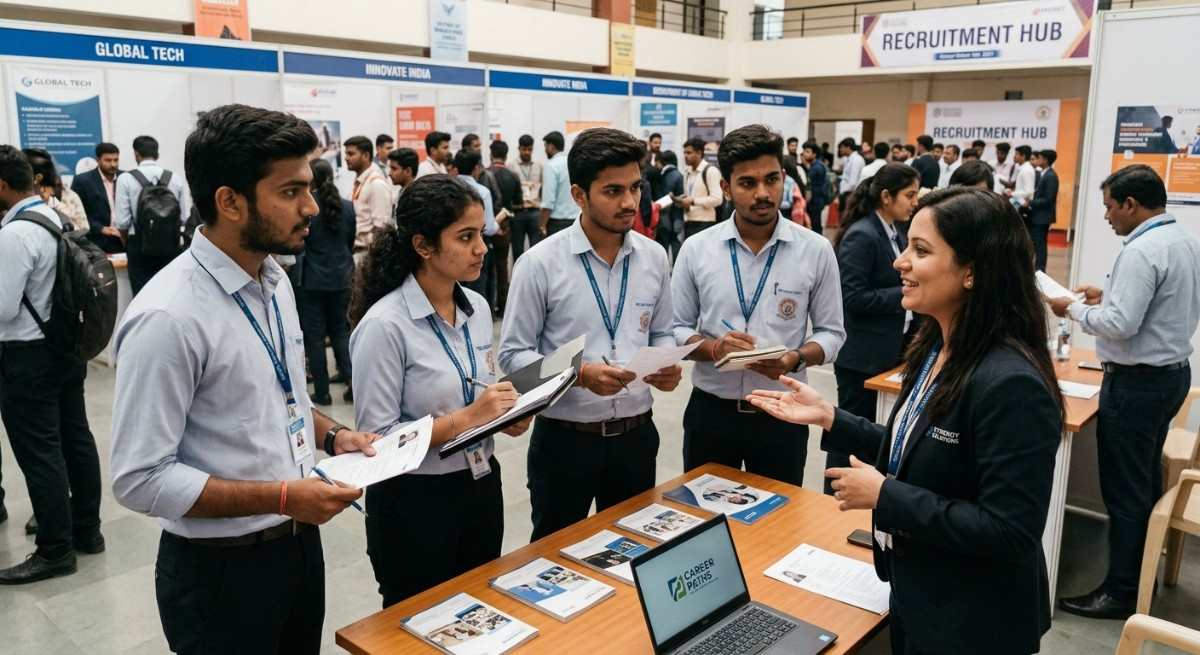
Engineering colleges improve placement rates not by running more drives, but by measuring student readiness early and acting on it. When Training and Placement Officers can see which students are placement-ready — and which need specific support — months before recruiters arrive, they can target training, close skill gaps, and send stronger candidates into every drive. The shift is from reactive placement management to proactive readiness building.
Every placement season follows a familiar pattern. Recruiters arrive, students scramble to prepare, and the Training and Placement Officer works flat out to match hundreds — sometimes thousands — of students to opportunities. When the numbers come in, they rarely reflect the effort.
The problem usually isn't the number of companies visiting campus. It's that too many students aren't ready when those companies arrive, and no one knew in time to do anything about it. This playbook lays out a readiness-first approach to improving placement rates in engineering colleges — one built around visibility and early intervention rather than last-minute preparation.
Why Placement Rates Stall (Even at Good Colleges)
Strong academics don't automatically translate into strong placements. Across engineering institutions, a few recurring issues hold placement rates back:
- Readiness is invisible until it's too late. Most colleges only discover a student isn't job-ready during the placement drive itself — when there's no time left to fix it.
- Training is one-size-fits-all. Entire batches receive the same aptitude or soft-skills sessions, whether they need them or not, so the students who need the most help don't get targeted support.
- Data lives in spreadsheets. Placement teams track hundreds of students across disconnected files, leaving little time for strategy.
- Preparation starts too late. When readiness work begins in the final year, there isn't enough runway to close real gaps.
The colleges that consistently outperform aren't necessarily the ones with the biggest campuses or the most recruiters. They're the ones with early visibility into who's ready and who needs help.
The Shift: From Placement Drives to Placement Readiness
The most important change in campus recruitment is a change in what gets measured. Institutions are moving away from being judged only by how many drives they organise, toward measuring student readiness before placement season even begins.
This matters because early measurement enables early action. When a TPO knows in the second or third year that a group of students is weak on a particular capability, there's time to intervene. When that same gap is discovered during a drive, the opportunity is already lost.
Building placement readiness into the student journey — rather than treating it as a final-year sprint — is what separates colleges with rising placement rates from those stuck at the same numbers year after year.
A Readiness-First Playbook to Improve Placement Rates
Here's a practical sequence engineering colleges and placement teams can follow.
1. Measure Readiness Early — and Objectively
You can't improve what you can't see. Start by assessing student readiness well before placement season, across the capabilities recruiters actually screen for: aptitude, technical skills, communication, and workplace behaviour.
The goal isn't a single score. It's an objective, cohort-wide picture of where each student stands — so the placement team has real data instead of assumptions. A structured workforce readiness assessment gives institutions this early visibility at both the individual and batch level.
2. Identify Gaps at the Student and Cohort Level
Once you can see readiness, the next step is diagnosing where the gaps are. Some students may be technically strong but struggle with communication; others may need aptitude support or interview practice.
A cohort-level skill gap assessment turns raw readiness data into a clear map of what each group needs — which is the foundation for training that actually moves the numbers.
3. Make Training Targeted, Not Uniform
This is where placement rates genuinely shift. Instead of giving every student the same training, use the gap data to direct support where it's needed:
- Students weak on aptitude get focused quantitative and reasoning practice
- Students strong technically but weak on communication get interview and presentation coaching
- Students close to ready get advanced mock drives and role-specific preparation
Targeted training uses your limited time and budget where they'll have the most impact — and improves student employability across the whole cohort more efficiently than blanket sessions.
4. Run Structured Mock Drives and Track Progress
Readiness isn't a one-time measurement. After training, reassess. Structured mock interviews, group discussions, and aptitude rounds — scored consistently, not on ad-hoc notes — show whether students are actually improving and who still needs help.
Longitudinal tracking across assessment cycles lets the placement team see momentum building (or stalling) long before recruiters arrive.
5. Start Earlier Every Year
The colleges seeing the biggest gains begin readiness work in the first and second years, not the final one. Early aptitude foundations, communication development, and exposure to workplace expectations give students the runway to actually close gaps — so by final year, preparation is refinement rather than rescue.
6. Give the Placement Team Data, Not Spreadsheets
A TPO managing readiness, training, and employer coordination across a large batch can't do it from disconnected files. Consolidating readiness data, gap analysis, and progress tracking into one view frees the placement team to focus on strategy and employer relationships — the work that actually brings better opportunities to campus.
How ChangeBegins Supports Placement Teams
ChangeBegins helps engineering colleges move from reactive placement management to proactive readiness building. The platform brings assessment, readiness insights, skill-gap identification, and progress tracking into one place — so placement teams can see who's ready, understand what each cohort needs, and intervene early.
The assessment framework has been validated by a leading university's research lab, and institutions can start with a focused pilot on a single cohort before wider rollout. For placement teams, this is the difference between hoping students are ready and knowing exactly where they stand.
Explore the ChangeBegins career guidance platform for colleges to see how readiness-first placement works.
Frequently Asked Questions
How can engineering colleges improve their placement rates?
By measuring student readiness early, identifying skill gaps at the cohort level, delivering targeted (not uniform) training, running structured mock drives, and starting preparation in the first and second years rather than the final one. Early visibility into who's ready enables the early intervention that actually improves outcomes.
What is placement readiness?
Placement readiness is how prepared a student is to succeed in campus recruitment — across aptitude, technical skills, communication, and workplace behaviour. Measuring it early lets placement teams intervene before it's too late.
Why do placement rates stay low even at good colleges?
Often because readiness is invisible until the drive itself, training is one-size-fits-all, data is scattered across spreadsheets, and preparation starts too late to close real gaps.
When should placement preparation begin?
As early as the first or second year. Starting early gives students enough runway to build aptitude, communication, and workplace skills, so final-year effort refines readiness rather than rushing to create it.
How does assessment data help Training and Placement Officers?
It replaces assumptions with objective, cohort-wide visibility — showing who's ready, who needs help, and what kind of support each group needs, so training and placement decisions are data-driven.
Can colleges try a readiness platform before full implementation?
Yes. Institutions can start with a focused pilot on a single cohort to see the approach in action before rolling it out more widely.