7 Placement Readiness Gaps Holding Engineering Students Back From Getting Hired
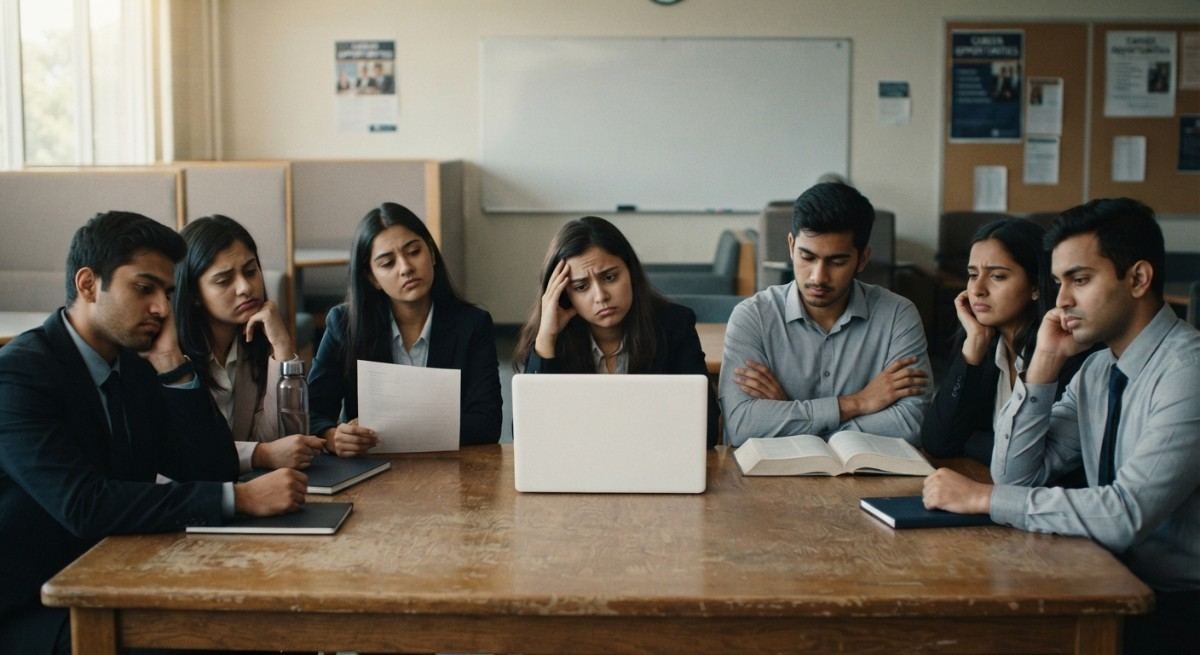
An engineering degree gives students a strong technical foundation, but academic performance alone does not always translate into workplace readiness. A student may have a good CGPA, technical certifications and multiple academic projects, yet struggle during an aptitude test, technical interview, group discussion or behavioural round. As employers increasingly look for a combination of technical and human capabilities, colleges need to look beyond marks and resumes to understand whether students are actually prepared for the roles they want to pursue. The World Economic Forum's Future of Jobs Report 2025 identifies analytical thinking, AI and big data, technological literacy, creative thinking, resilience, flexibility and agility among the skills becoming increasingly important. World Economic Forum: Future of Jobs Report 2025 For engineering colleges, this makes placement readiness less about preparing students just before recruitment and more about identifying capability gaps early enough to do something about them.
1. Communication Skills That Don't Match Technical Ability
An engineering student may understand a technical concept but struggle to explain it clearly. This becomes particularly noticeable during technical interviews, group discussions, presentations and HR rounds, where students are expected to communicate their reasoning rather than simply provide an answer. Research involving engineering students has also examined communication as an important component of engineering employability, reinforcing the need to develop communication alongside technical capability. Engineering Employability and Communication Skills Research
Example: Consider an engineering student who has built a strong final-year project and understands the technology behind it. During an interview, however, the recruiter asks the student to explain the project's business value and the student's individual contribution. The student knows the answer but struggles to structure the response and communicate it confidently. The problem is not necessarily a lack of technical knowledge. It is the gap between knowing something and being able to communicate it in a professional setting.
How ChangeBegins can help
AI-enabled assessments can help colleges evaluate different dimensions of student readiness at scale instead of relying entirely on academic scores or subjective observations. AI can help identify patterns across capabilities and highlight areas where students may need further development. ChangeBegins can support this process by assessing cognitive, technical and behavioural capabilities and providing insights that can help institutions understand individual development needs. This gives placement teams a more structured view of students before recruitment begins, while allowing development programmes to focus on specific gaps rather than treating every student in the same way.
2. Problem-Solving Skills That Haven't Been Tested Beyond Academics
Engineering education naturally involves problem-solving, but workplace problems are not always presented as clearly defined questions with a known method of solving them. A student may perform well in examinations but find it difficult to approach an unfamiliar problem, evaluate different options or explain why a particular solution makes sense. Analytical thinking continues to be one of the important skills identified by the World Economic Forum, alongside creative thinking and technological literacy. World Economic Forum: Skills Outlook
Example: A student applying for a software role may be able to solve programming questions that they have practised before. During an interview, the recruiter presents a new problem and asks the student to explain how they would approach it. The student knows several programming concepts but struggles to break the unfamiliar problem into smaller parts. This shows why technical knowledge and problem-solving ability are related but not identical.
How ChangeBegins can help
AI can help colleges assess cognitive and analytical capabilities in a more structured way across larger student groups. Instead of looking only at marks, institutions can use assessment insights to understand where students may require additional development. ChangeBegins can contribute by assessing student capabilities and helping identify areas that require attention. These insights can then support targeted training, allowing colleges to focus on developing the capabilities that matter for students' intended career paths rather than relying only on generic placement training.
3. Technical Knowledge Without Enough Practical Application
Technical knowledge remains essential for engineering careers, but knowing concepts in theory is different from applying them to real workplace situations. Students can complete courses, certifications and academic projects without necessarily understanding how their capabilities relate to the requirements of a particular job. Research on engineering employability has repeatedly highlighted the importance of connecting academic learning with practical workplace requirements. Engineering Employability Research
Example: An engineering student may have completed several programming courses and list multiple technologies on their resume. However, when applying for a specific software development role, they may not know which of those skills are most relevant or how their current capabilities compare with what the role requires. The student has technical knowledge, but there is a gap between that knowledge and its application to a specific career path.
How ChangeBegins can help
AI can help colleges compare different aspects of student capability with the requirements associated with relevant job families. This can help move the conversation from simply asking "What skills does this student have?" to "How relevant are those capabilities to the role the student wants to pursue?" ChangeBegins can support this through capability assessment and job-family fitment, helping institutions understand student profiles in relation to potential career paths. This can give students a clearer direction while helping placement teams identify where additional preparation may be required.
4. Adaptability and Learning Agility Gaps
The technologies and processes students encounter after graduation may not be the same ones they learned during their degree. New tools, AI systems, software platforms and workplace practices continue to emerge, making adaptability and willingness to learn increasingly important. The World Economic Forum identifies resilience, flexibility and agility, curiosity and lifelong learning among the capabilities expected to remain important as work changes. World Economic Forum: Future of Jobs Skills Outlook
Example: An engineering graduate joins an organization where the team introduces a new AI-powered development tool. Two graduates with similar academic backgrounds may respond very differently. One may quickly explore the tool, learn how it works and adapt their workflow, while another may struggle to move away from familiar methods. Their technical knowledge may initially be similar, but their ability to adapt can affect how quickly they become effective in the workplace.
How ChangeBegins can help
AI can help institutions look beyond academic performance and understand behavioural and readiness-related indicators that may influence how students respond to changing situations. ChangeBegins can help colleges assess behavioural readiness alongside cognitive and technical capabilities, giving institutions a broader understanding of student profiles. These insights can then be used to identify students who may benefit from development in areas such as adaptability, learning orientation and workplace readiness before they enter recruitment processes.
5. Digital and AI Readiness Gaps
Digital capability is becoming an increasingly important part of employability, including for engineering graduates. AI readiness, however, is broader than knowing how to use a chatbot. Students may need to understand digital tools, data, AI-enabled workflows and the responsible use of technology depending on the roles they want to pursue. The World Economic Forum identifies AI and big data and technological literacy among the fastest-growing skill areas. World Economic Forum: Skills Outlook
Example: An engineering student may have strong programming fundamentals but little experience working with AI-assisted development tools, data workflows or emerging technologies relevant to the roles they are targeting. Another student from the same department may already be experimenting with these tools through projects. Both students may have similar academic scores, but their current digital readiness may be different.
How ChangeBegins can help
AI can help colleges assess capabilities at scale and identify areas where students may need additional exposure or development. Recent research involving engineering students in Tamil Nadu and Telangana also identified gaps across several areas of digital literacy, including information and data literacy, communication and collaboration, digital content creation, safety and problem-solving. Research on Digital Literacy Among Engineering Students in Tamil Nadu and Telangana ChangeBegins can help institutions build a broader picture of student capability by combining assessment insights with skill-gap identification, helping colleges understand where students may need to strengthen their readiness for technology-driven roles.
6. Students Preparing for Roles That Don't Fit Their Profile
Not every engineering student is suited to the same career path, and choosing a role based only on popularity, peer influence or salary expectations can create problems later. A student's interests, capabilities, behavioural characteristics and preferred working style can all influence whether a particular career direction is a good fit. This makes career alignment an important part of placement readiness.
Example: A student may decide to pursue software development because most classmates are applying for software roles. However, the student's strongest capabilities may point towards data analysis, product operations or another technology-related role. If the student spends months preparing for a role that does not align well with their profile, they may struggle despite putting in significant effort.
How ChangeBegins can help
AI can help bring together different signals from student assessments and provide a more structured view of potential career and job-family alignment. Instead of asking students to choose a career based entirely on assumptions, colleges can use assessment insights to help students understand their strengths and potential areas of fit. ChangeBegins' AI career assessment is designed to assess areas including cognitive aptitude, technical capability and behavioural readiness, while providing job-family fitment and career-related insights. ChangeBegins AI Career Assessment This can help colleges guide students towards relevant career paths while also identifying the capabilities they need to strengthen for those roles.
7. Colleges Don't Know Whether Readiness Actually Improved
Identifying a placement readiness gap is only the beginning. A college may discover that students need stronger communication, better problem-solving or improved digital skills and then conduct training programmes. But without reassessment, it can be difficult to determine whether those interventions actually improved student readiness. Placement preparation should therefore be treated as an ongoing process rather than a one-time assessment or workshop.
Example: Imagine a college identifies communication as a common weakness among its final-year students and conducts a series of interview and presentation workshops. After the programme, students receive completion certificates, but the placement team has no structured way to determine whether their capabilities actually improved. A second assessment could provide a clearer picture of progress and help identify students who still need support.
How ChangeBegins can help
AI can make repeated assessment more scalable by helping colleges compare student results across different assessment cycles and identify changes in capability. ChangeBegins follows an assessment approach that moves from Assess → Diagnose → Identify Gaps → Develop → Reassess, allowing institutions to move beyond simply identifying weaknesses and towards tracking development over time. ChangeBegins Skill Gap Assessment This creates a more continuous approach to placement readiness, where assessment results can inform development and reassessment can help determine whether that development is making a difference.
Final Thoughts
Placement readiness is not a single skill that students can develop a few weeks before campus recruitment. It is a combination of technical capability, problem-solving, communication, adaptability, digital readiness, behavioural readiness and alignment with potential career paths. An engineering student may be strong in one area and require support in another, which is why colleges need a more complete view of student capabilities.
AI can help make this process more structured and scalable, but its value is greatest when it supports meaningful human decisions rather than replacing them. For colleges, the goal should be to identify gaps early, provide relevant development opportunities and measure progress over time. Platforms such as ChangeBegins can support this journey by bringing assessment, skill-gap identification, career and job-family fitment and reassessment into a more connected process. Ultimately, the objective is not simply to identify which engineering students are placement-ready today, but to give more students a clear path towards becoming ready for the roles they want tomorrow.